Electro-Redox Process: A Long-Overlooked Mode of Single-Electron Transfer in Organic Synthesis
Abstract
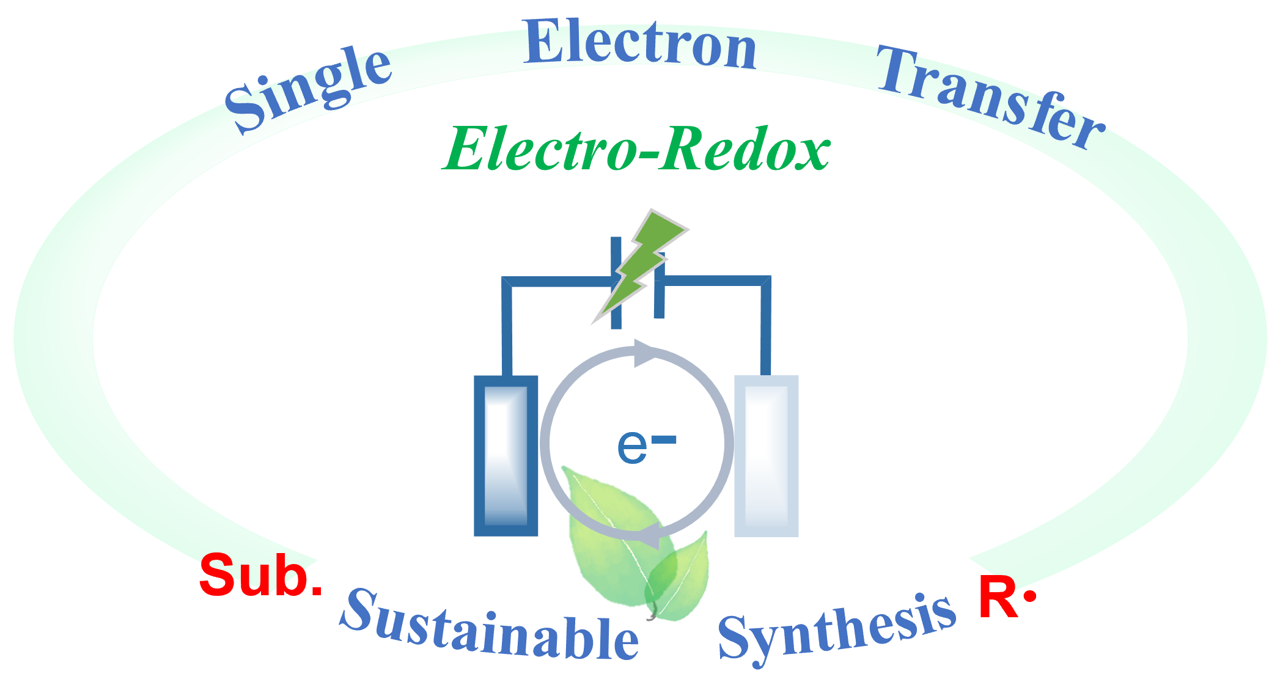
Single electron transfer (SET) is a fundamental step in radical-mediated organic transformations, enabling unique bond-forming and cleavage that are difficult to access via traditional two-electron pathways. Electrochemical redox directly drives single electron transfer processes through heterogeneous electron transfer at the electrode-electrolyte interface without external catalysts such as transition metals and precious metals. Anodic single-electron oxidation activates inert C–H bonds, generating carbon-centered radicals for selective functionalization, whereas cathodic reduction enables homolytic cleavage of C–X bonds, generating radical anions or carbanions for reductive coupling and dehalogenation. Electrochemical single electron transfer (SET) has emerged as a powerful, sustainable alternative to metal-catalyzed and photo-redox systems. By eliminating stoichiometric redox agents, transition metals, and photocatalysts, electro-synthesis utilizes precise potential control and a traceless electron supply under mild conditions to avoid metal contamination, the generation of by-products, and reduce environmental impact. Mediator-assisted SET and hydrogen-atom transfer enable selective oxidation of unactivated aliphatic C–H bonds, while electrochemical radical cyclization constructs C–C and C–heteroatom bonds. In this review, we summarized the fundamental principles, general mechanism and technical characteristics of the electrochemically driven by single electron transfer process. Advances in anodic C–H functionalization, cathodic reduction, cyclization and mediator-assisted oxidation are highlighted, alongside electrode materials and reactor engineering. We aim to provide a comprehensive overview of recent advancements in this field, highlighting key mechanistic insights and future opportunities for sustainable synthesis via single electron transfer. Remaining challenges such as selectivity, scale-up, and emerging directions are also discussed.
Graphical Abstract