Precision Photocatalytic Chemistry for Subcellular Proximity Labeling
Abstract
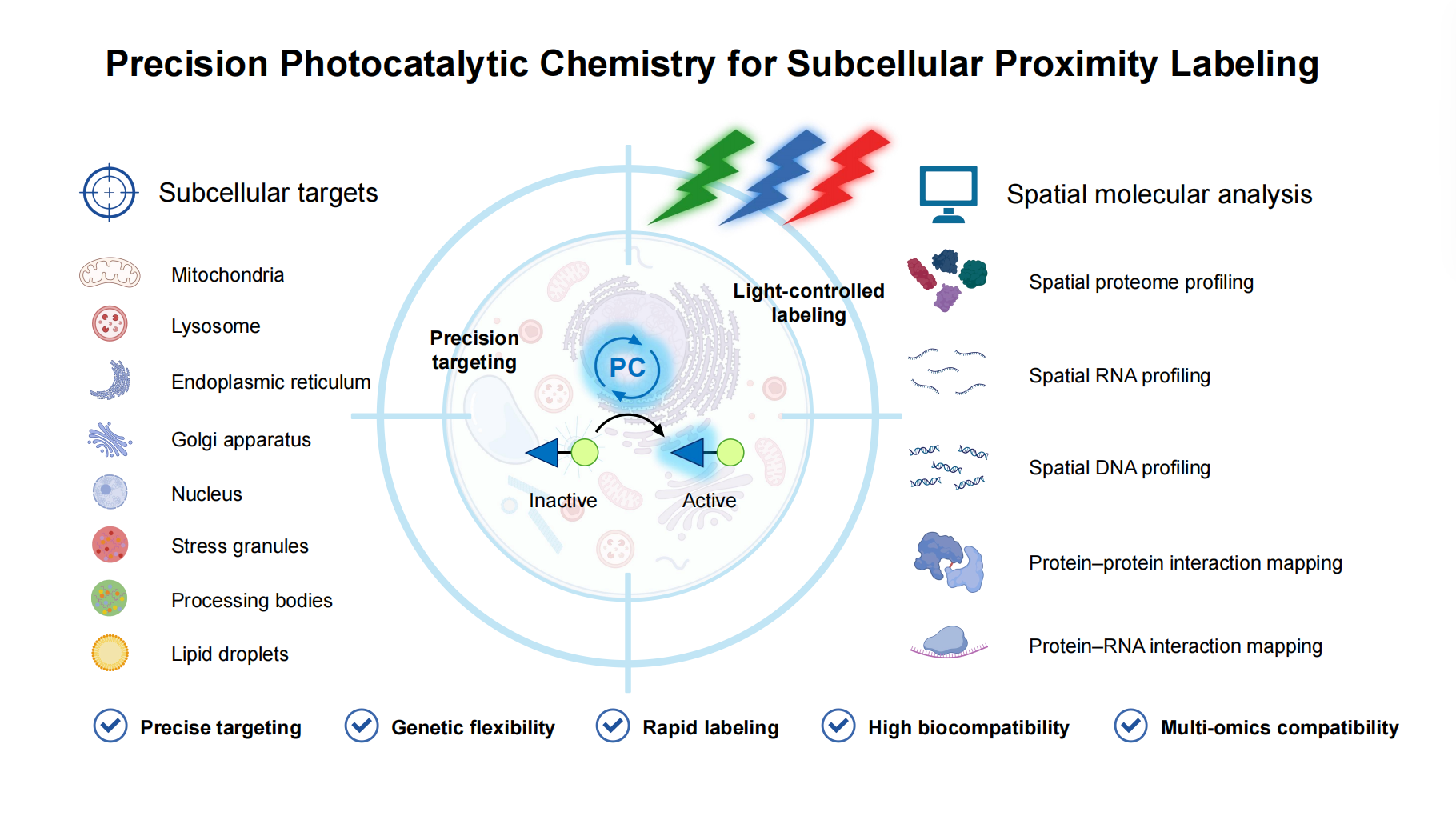
Subcellular compartmentalization is essential for coordinating biochemical complexity in eukaryotes. The dynamic intracellular trafficking of biomacromolecules is vital for organelle functional integrity and cellular homeostasis. Photocatalytic proximity labeling (PPL) has emerged as a versatile strategy for probing these processes and subcellular omics, enabling in situ covalent tagging of biomolecules via light-triggered, short-lived reactive species. This review summarizes recent developments in precision photocatalytic chemistry for subcellular proximity labeling, as well as the targeting mechanisms that provide PPL with excellent spatial resolution. Furthermore, we highlight its applications in subcellular proteomics, spatial RNA/DNA profiling, and protein-protein/protein-RNA interaction mapping. We further discuss ongoing challenges and emerging innovations aimed at improving precision and broadening the scope of biological applications. Together, these light-controlled approaches provide high spatiotemporal resolution while maintaining biocompatibility with physiological environments, addressing key limitations of conventional methods, positioning PPL as a powerful framework for elucidating molecular mechanisms in living systems.
Graphical Abstract